Jensen Huang’s First X Post: 150+ Companies Sign Open-Weights Letter, Anthropic Doesn’t


On July 24, 2026, NVIDIA CEO Jensen Huang made his first-ever post on X — and used it to publish an industry coalition letter titled “Open Weights and American AI Leadership.” The three-page statement, hosted on NVIDIA’s own servers and mirrored on Microsoft’s corporate site, asks Washington not to restrict downloadable model weights. It launched with 25 signatories, doubled to 50 within a day, and by July 28 the live roster had grown past 150 organizations. Anthropic and xAI are still not among them.
Intermediate

What the Letter Argues
The letter treats publicly downloadable model weights as strategic infrastructure rather than a security liability. Its case rests on five claims: organizations can build on advanced models “without training one from scratch or paying frontier-model prices for every task”; open weights spread competition across model developers, cloud providers, and application builders; customers avoid being “locked into a single provider”; defenders need capabilities comparable to attackers; and transparency lets “a broad community of researchers and developers examine their behavior, identify vulnerabilities, develop safeguards.”
The historical analogy is explicit. Huang’s coalition compares the current moment to the 1980s debate over open-source software — a technology that early skeptics wanted constrained and that now underpins most of the internet, major tech companies, the U.S. military, and federal agencies. The letter asks policymakers to avoid “premature restrictions,” expand compute access for startups and researchers, invest in shared training assets and evaluation frameworks, and distinguish legitimate distillation from unlawful value extraction rather than banning the technique outright.
Huang’s own framing in the post was short: “Open models strengthen safety and cybersecurity, accelerate innovation and diffusion, and enable sovereignty.” He added that “the world needs both frontier closed models and frontier open models.” The post reportedly drew around 11 million views.
The Kimi K3 Trigger
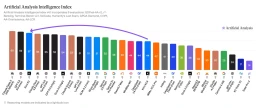
The letter did not appear in a vacuum. Moonshot AI released Kimi K3 on July 16, 2026, and it landed third on the Artificial Analysis Intelligence Index — ahead of several U.S. frontier models. Full open weights followed on July 27. The Philadelphia Semiconductor Index fell 12.5% in the following week, and Washington began weighing restrictions on the use of Chinese open-weight models.

Two days before publishing the letter, Huang told Axios that American companies should be free to run those models: “These Chinese models are excellent. Open-source models that are excellent should be used.” He dismissed the backdoor argument — companies can fine-tune open models and run them inside secure environments, and open weights invite outside researchers to find flaws. He also rejected the idea that free models threaten NVIDIA’s business: “Free AI should be great for hardware. Free AI should be great for chips. Free AI should be great for data centers.”
His concentration argument is the sharpest line in the interview: “If everything just becomes one single model, one single point of attack, one single source of failure, I think the world is much, much more vulnerable.” On competitive risk he was blunt — “There’s no scenario where China runs U.S. companies off the road. Zero possibility.”

Who Signed, and Who Didn’t
The launch roster included Meta, Microsoft, NVIDIA, IBM, Dell, Palantir, Mistral AI, Hugging Face, Perplexity, Mozilla, Y Combinator, and Andreessen Horowitz. The second tranche brought OpenAI, Google, AMD, Cisco, Cloudflare, GitHub, Block, and Ollama — OpenAI reversing course within 24 hours of an initial absence that had been widely reported. Amazon, absent from the first two versions, appears on the live list as of July 28. Anthropic and xAI do not.
Anthropic broke its silence on July 27 with a formal position statement. Dario Amodei’s opening line was a denial: “Anthropic has never advocated for a ban on open-weights models,” and he called open models without dangerous capabilities “a public good.” But he declined to endorse the letter’s central safety claim, arguing that whether open models raise risk “should emerge from testing, rather than be decided in advance.” Anthropic’s three asks — chip export controls on China, a crackdown on industrial-scale distillation, and mandatory pre-release safety testing for all sufficiently capable models, open and closed — sit directly against the letter’s request that distillation and open releases be left alone. Amodei also noted that meaningful testing “would need to be global, which means even the CCP would need to be on board.”
What This Means
The signature count is doing rhetorical work here, and it is worth reading carefully. A roster spanning chipmakers, hyperscalers, VCs, and open-model startups is not a coalition of shared technical conviction — it is a coalition of parties whose economics improve when capable weights are free. NVIDIA sells the hardware that runs them; Hugging Face hosts them; a16z funds companies built on them. That does not make the argument wrong, but it means the letter’s strongest signal is commercial alignment, not a safety consensus.
The genuinely unresolved question is empirical: do open weights make systems safer through inspection, or riskier through irreversibility? Both sides invoked cybersecurity and got opposite answers. Anthropic’s testing-first position is the only one that treats it as a question rather than a premise, though mandatory pre-release testing for open models is far easier to state than to enforce once weights are on Hugging Face.
Sandy Carter’s critique in Forbes is also worth keeping in view: the letter argues for openness at the model layer while leaving chip access, data residency, agent auditability, and proprietary software untouched. NVIDIA’s CUDA remains closed. Openness, in this framing, is being requested precisely at the layer where its signatories do not compete.
Related Coverage
- Kimi K3 Hits Third on Artificial Analysis; Open Weights Due July 27 — the release that set off the policy fight
- NVIDIA Launches Nemotron Coalition to Build Open Frontier AI Models — NVIDIA’s earlier organizing push for open models
- Meta Hasn’t Given Up on Open Source: Muse Spark Launches as Open-Weight Plans Continue — a signatory’s own open/closed balancing act
- Anthropic Redeploys Claude Fable 5 as U.S. Lifts Export Controls — background on Anthropic’s export-control posture
- Thinking Machines Releases Inkling, Its First Open-Weight Model — the widening open-weight field in the U.S.
This post was drafted with AI assistance and reviewed by RITS staff.
Sources
- Open Weights and American AI Leadership (NVIDIA, PDF, July 24, 2026)
- Microsoft — Open Weights and American AI Leadership (live signatory list)
- Anthropic — Our position on open-weights models (July 27, 2026)
- TechSpot — NVIDIA’s Jensen Huang joins X, defends Chinese AI
- Fortune — Huang’s first X post warns the AI industry off a 1980s mistake
- TechCrunch — Amodei responds: doesn’t oppose open-weight models, but fears Chinese AI
- Forbes — Huang’s open-weights letter doubled to 50
- The Register — Tech leaders issue letter on the value of open-weight AI


 沪公网安备31011502017015号