IntermediateAI
Thinking Machines Releases Inkling, Its First Open-Weight Model
- Apache 2.0
- llm
- mixture of experts
- multimodal
- open source
- thinking machines
On July 15, 2026, Thinking Machines Lab released Inkling — its first model trained from scratch and, notably, its first open-weight release. Founded in February 2025 by former OpenAI CTO Mira Murati, the lab is best known for the Tinker fine-tuning platform; Inkling is a 975-billion-parameter Mixture-of-Experts model (41B active) published under the permissive Apache 2.0 license, with full weights on Hugging Face. Rather than chasing leaderboard supremacy, Thinking Machines is betting that a model organizations can download and adapt will beat a one-size-fits-all API.


What Inkling Is
Inkling is a multimodal, decoder-only transformer with 66 layers and a Mixture-of-Experts (MoE) design: 256 routed experts plus 2 shared experts per layer, with 6 routed experts active per token. That sparsity is what lets a 975B-parameter model activate only 41B parameters on any given forward pass — keeping inference costs closer to a mid-sized dense model. Attention alternates between sliding-window and global layers at a 5:1 ratio, and the model supports a context window of up to 1 million tokens.
It was pretrained on 45 trillion tokens spanning text, images, audio, and video, and reasons natively over text, images, and audio using an encoder-free architecture (images and audio are fed directly, without a separate vision or audio encoder). Outputs are text, code, and structured data. Weights ship in BF16, MXFP8, and NVFP4 numerics — the NVFP4 checkpoint drops the hardware bar from roughly 2 TB of aggregated VRAM to around 600 GB, or 4× Blackwell B300 / 8× H200 GPUs.
Benchmarks — and an Honest Framing
Thinking Machines is unusually candid: it says plainly that Inkling “is not the strongest overall model available today, open or closed.” The numbers bear that out. At maximum reasoning effort, Inkling posts 97.1% on AIME 2026, 87.2% on GPQA Diamond, 77.6% on SWE-Bench Verified, 73.5% on MMMU Pro, and 91.4% on VoiceBench. Strong — but on the model card’s own comparisons, closed frontier systems still lead (for example, Claude Fable 5 reaches 95.0% on SWE-Bench Verified and GPT-5.6 Sol hits 47.2% on Humanity’s Last Exam versus Inkling’s 29.7%).
The pitch is efficiency and adaptability, not raw dominance. The lab reports that Inkling reaches comparable coding performance to Nvidia’s Nemotron 3 Ultra while using roughly one-third the tokens, and that a version tuned with Bridgewater Associates scored 84.7% on a financial-reasoning benchmark at about one-fourteenth the operational cost of proprietary alternatives. A lighter sibling, Inkling-Small (276B total / 12B active), is previewing alongside the flagship and matches or beats it on several tasks at lower latency.

Why “Customization, Not Leaderboards”
The strategy is the story. Thinking Machines argues that the future of applied AI is organizations fine-tuning open models on their own data and workflows — which is exactly what its Tinker platform sells. Inkling becomes the free foundation; the business is training, hosting, and the ecosystem around it. That framing echoes recent commentary from Microsoft CEO Satya Nadella, who has warned that companies leaning entirely on proprietary models “effectively pay twice,” and from Hugging Face CEO Clem Delangue, who expects production workloads to shift toward private and open-source models.
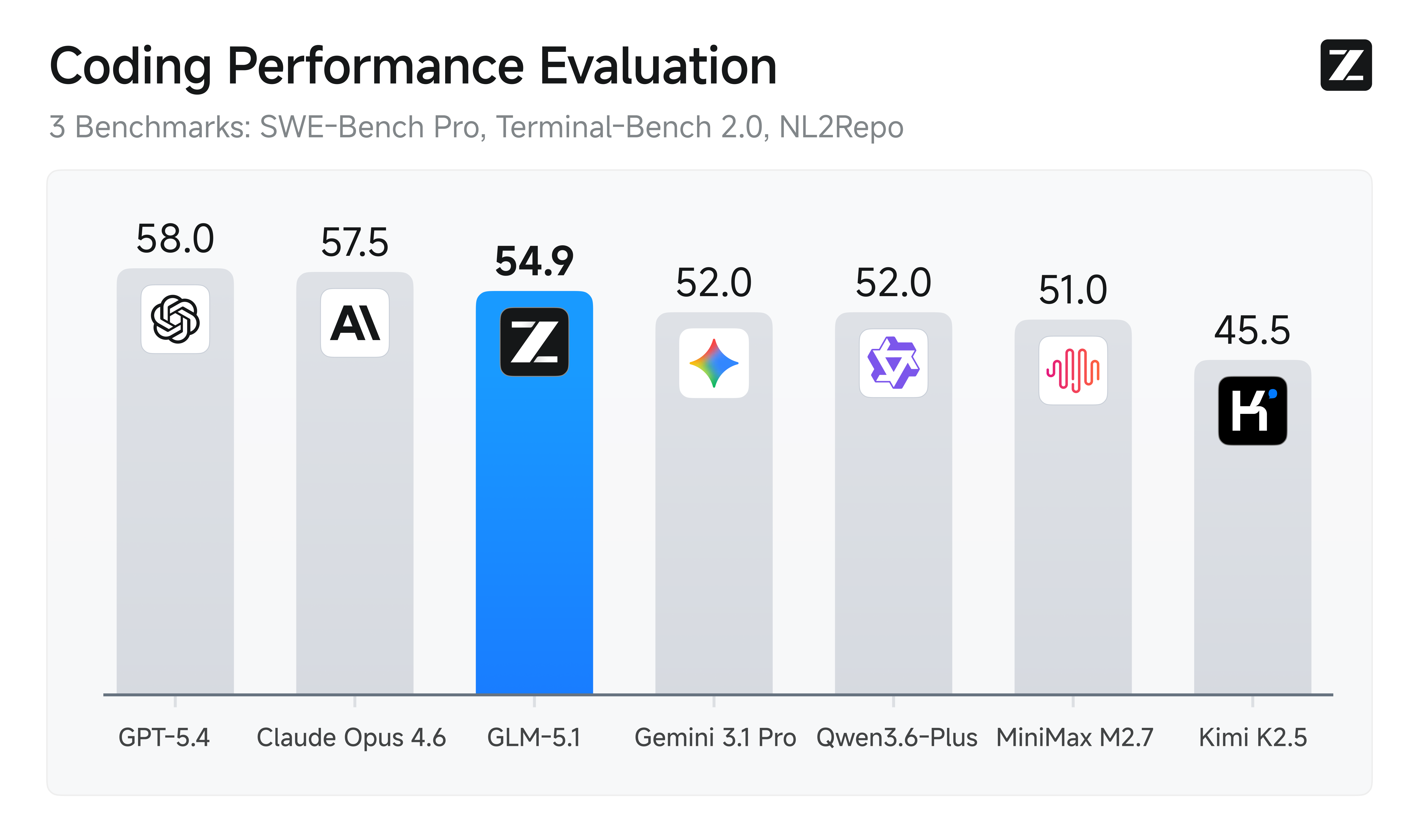
There’s a geopolitical subtext too. Much of the momentum in open-weight releases over the past year has come from Chinese labs — GLM, MiniMax, Kimi, Qwen — and Inkling is being read as an American answer in that arena. Thinking Machines even acknowledges using other open models, including Moonshot AI’s Kimi K2.5, to generate early post-training data before large-scale reinforcement learning, with future models slated to move to fully self-contained post-training.


What This Means
Inkling lands a little over nine months after the company was founded — fast for a from-scratch frontier-scale model — and arrives backed by one of the largest seed rounds in venture history ($2B at a $12B valuation, with Andreessen Horowitz, Nvidia, AMD, Cisco, and Jane Street among investors). For researchers and builders, the practical takeaway is access: a permissively licensed, million-token, multimodal MoE that runs on a single well-equipped GPU node in its NVFP4 form and is available through TogetherAI, Fireworks, Modal, Databricks, Baseten, and open inference stacks like vLLM, SGLang, and llama.cpp.
As Thinking Machines puts it: “Our mission is to build AI that extends human will and judgment. Today we are advancing our mission by releasing a model we trained from scratch with the full weights available, so that people can make it their own.” Whether “customizable” beats “strongest” as a product thesis is the experiment now running in the open.
This post was drafted with AI assistance and reviewed by RITS staff.


 沪公网安备31011502017015号