Qwen-Image-2.1: Native Transparency and 10-Image Editing


Alibaba’s Qwen team open-sourced Qwen-Image-2.1 on September 20, 2026 — an update to its open-weight image model that folds native transparent-image generation into the same 7-billion-parameter system used for text-to-image and editing, and extends reference-image editing from a handful of inputs to up to ten.
Intermediate

Technical Details
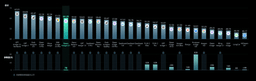
Qwen-Image-2.1’s visual generation component uses 32 Single-Stream DiT (Diffusion Transformer) layers at 7B parameters — the same lightweight architecture as Qwen-Image-2.0, released in February 2026 as a smaller, faster successor to the original 20B-parameter Qwen-Image. The team says the model still delivers competitive quality against both open- and closed-source rivals on its internal Qwen-Image-Bench evaluation.

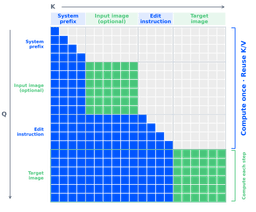
Multi-image editing gets a dedicated efficiency mechanism: a mixed-granularity attention architecture applies a token-level causal mask to text (system prompts, editing instructions) and a chunk-level mask to image generation, while a KV cache reuse scheme lets reference images and instructions be computed once and reused as static context across steps. The Qwen team frames this as the main lever for keeping multi-image editing fast despite the added inputs.

What’s New
The headline addition is native transparency: a single prompt can now request a regular image or an RGBA image with a real alpha channel, rather than requiring a separate model. Alibaba shipped a dedicated transparency model, Qwen-Image-Layered, in December 2025; Qwen-Image-2.1 folds that capability into the unified generation-and-editing model, so transparent layers can also be edited directly — changing an expression while keeping the background transparent, or swapping text embedded in a transparent layer — and a real photograph’s subject can be lifted out as an RGBA cutout.
Editing itself gets three concrete upgrades. Reference images go from a couple of inputs to up to ten, letting the model combine six separate portraits into one group photo, or assemble an outfit from a model, clothing, shoes, a bag, and a hat. Local editing adds region-selection tools — colored circles, painted annotations, or a separate mask image — so an edit instruction can target one area without touching the rest of the composition. And task coverage now explicitly includes panoramas, infographics, and storyboards generated from a single reference image.

What This Means
Qwen-Image-2.1 is easy to mistake for a step past Qwen-Image-3.0, which the Qwen team previewed in July 2026 with 4.5k-token prompts — but that preview shipped with no benchmarks and no weights, and remains unreleased. Qwen-Image-2.1 is the open-weight line’s actual next release, following directly from 2.0.
The weights come with a catch most of Alibaba’s recent open releases haven’t had: Qwen-Image-2.1 ships under the Qwen Research License Agreement, which restricts use to research and evaluation and requires a separate paid license for commercial deployment. That’s a departure from the Apache 2.0 terms Alibaba has used for most of its recent Qwen releases, including the LLM line, and it puts Qwen-Image-2.1 in a different bucket than fully permissive open-weight image models like Alibaba’s own Z-Image or Ideogram’s Ideogram 4.0.
Related Coverage
- Qwen-Image-3.0: 4.5k-Token Prompts, No Benchmarks, No Weights — the still-unreleased preview of the next generation, distinct from this release
- Introducing Qwen-Image-Edit-2509 — the prior generation’s multi-image editing update
- Qwen-Image: Crafting with Native Text Rendering — the original 20B-parameter foundation model
This post was drafted with AI assistance and reviewed by RITS staff.


 沪公网安备31011502017015号