Anthropic Plugs Claude Into Adobe, Blender, and Ableton With Nine New Connectors


Anthropic released nine Claude connectors on April 28, 2026, plugging the assistant directly into the software that creative professionals already use — Adobe Creative Cloud, Blender, Ableton Live, Autodesk Fusion, Splice, SketchUp, Affinity by Canva, and Resolume’s Arena and Wire. The push reframes Claude from a generic chat tool into an orchestration layer that sits inside designers’, musicians’, and 3D artists’ working environments, and it comes with a notable side commitment: Anthropic joined the Blender Development Fund as a Corporate Patron at €240,000 or more per year.
General Audience


What’s in the Launch
Each of the nine connectors targets a specific creative workflow rather than a generic “AI in your app” experience:
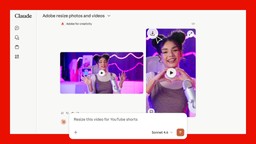
- Adobe for creativity — reaches across 50+ Creative Cloud apps including Photoshop, Premiere, and Express for tasks like portrait retouching, asset design, and video resizing.
- Blender — a natural-language interface to Blender’s Python API that can analyze and debug entire scenes or batch-script changes across many objects.
- Ableton — grounds Claude’s answers in the official Live and Push documentation so musicians get accurate, version-correct guidance.
- Autodesk Fusion — conversational 3D model creation and modification for Fusion subscribers.
- Affinity by Canva — automates batch production work like image adjustments and layer renaming.
- SketchUp — turns a conversation into a 3D modeling starting point.
- Splice — searches the royalty-free sample catalog from inside a Claude session.
- Resolume Arena and Wire — real-time control aimed at VJs and live visual performers.
Anthropic frames the lineup as a coalition rather than a marketplace play. From the announcement: “Today, with a coalition of partners including Blender, Autodesk, Adobe, Ableton, and Splice, we’re releasing a set of connectors — tools that let Claude work alongside the software creative professionals rely on.”


Built on MCP, Not a Walled Garden
The connectors are implemented as Model Context Protocol (MCP) servers. That choice matters: MCP is an open standard, so the Blender connector — and others built the same way — can be used by other LLM clients, not just Claude. It is the same pattern that has produced public MCP servers from Figma, Hugging Face, and France’s national data portal over the past year, and it lowers the lock-in concern that usually shadows partnerships of this size.
For users, the day-to-day experience is closer to a knowledgeable assistant inside the app: Claude can read the current scene or document, suggest edits, write a script or shader on demand, and apply changes back through the host program’s API. For Adobe and Autodesk, it means Claude can act on top of their products without replacing the in-house AI features each company is building.
The Blender Funding Move and the Education Angle
The Blender Development Fund commitment is the part of the announcement most likely to ripple beyond the immediate product news. At €240,000+ per year, Anthropic joins a Corporate Patron tier alongside Epic Games, Netflix, and Wacom. Blender CEO Francesco Siddi noted that the support “enables the Blender team to keep pursuing projects independently” — a meaningful endorsement given how often AI partnerships compromise open-source governance.
Anthropic also announced curriculum partnerships with three art and design programs: Rhode Island School of Design (Art and Computation), Ringling College of Art and Design, and Goldsmiths, University of London. Students at these schools will get Claude access plus the new connectors, and faculty will help shape teaching materials around them.
What This Means
For creative professionals, the connectors close a long-standing gap: most AI assistants still required copy-pasting between a browser tab and the actual creative tool. By moving Claude inside Photoshop, Blender, Ableton, and Fusion, Anthropic removes that friction without forcing users onto a new platform. For educators — a relevant audience for RITS readers — the RISD, Ringling, and Goldsmiths partnerships are a useful preview of how AI literacy is starting to be built into studio-based curricula rather than bolted on.
The strategic read is that Anthropic is positioning Claude as a productivity orchestration layer rather than competing head-on with vertical AI features like Adobe’s Firefly. That is a less crowded fight, and it leans on the open MCP ecosystem rather than proprietary plugins.
Related Coverage
- Anthropic Releases Claude Opus 4.7 With Sharper Coding and 3x Vision Resolution — the model behind these connectors.
- Anthropic Launches Claude Managed Agents for Scalable AI Deployment — Anthropic’s earlier 2026 push to embed Claude in production systems.
- France Opens 74,000 Public Datasets to AI Agents via Official MCP Server — another high-profile MCP deployment.
- Introducing Figma’s Dev Mode MCP Server — a precedent for MCP in design tooling.
This post was drafted with AI assistance and reviewed by RITS staff.


 沪公网安备31011502017015号