Tencent Open-Sources Agent Memory: A Local Memory Hub for Agents


Tencent Cloud published TencentDB Agent Memory v2.0.3-beta.1 on October 13, 2026 — the newest release of an MIT-licensed memory system that gives AI agents persistent memory and runs on local SQLite storage by default. The project was first open-sourced in May 2026 and rebuilt in August around a team-level “memory hub” that shares what agents learn across a team. Its GitHub repository now sits at roughly 28,900 stars, and Tencent reports that the system cuts token consumption by up to 61.38% and lifts task pass rates by 51.52% on its own long-horizon evaluations.
Intermediate
What TencentDB Agent Memory Does
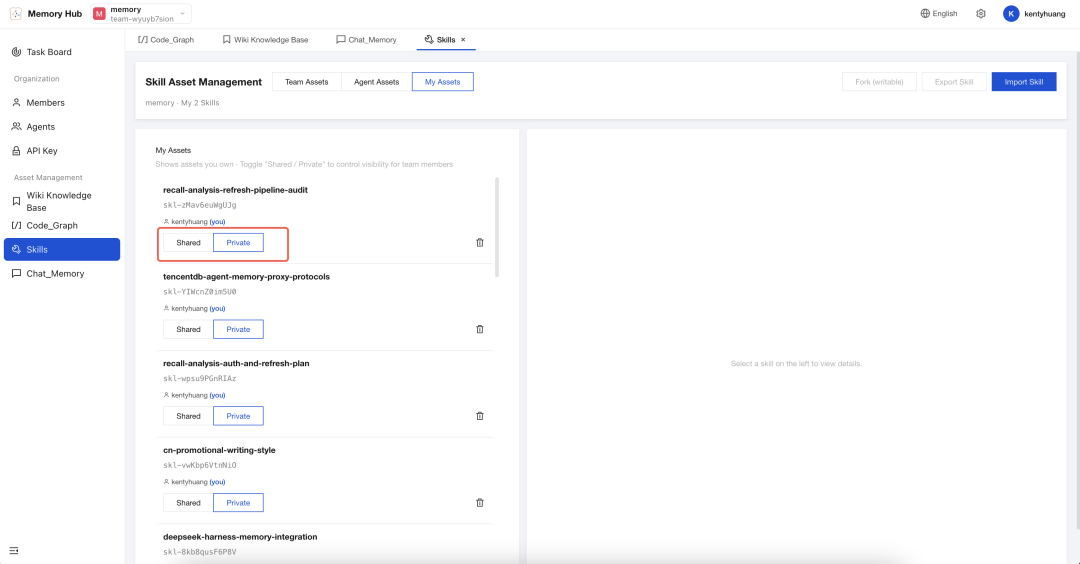
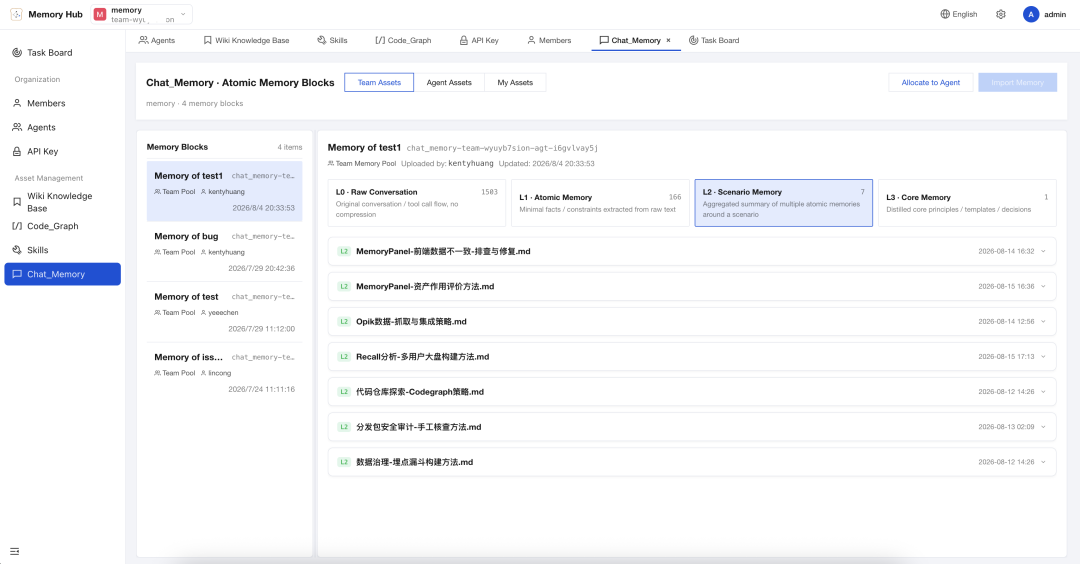
The problem it targets is familiar to anyone running agents for more than one session: project background, conventions and output formats get re-explained at the start of every new conversation. Tencent treats that work as an asset. The system distils activity into four reusable memory types — Chat Memory (preferences, facts, decisions), Skill (versioned procedures extracted from completed tasks), LLM-Wiki (documents turned into linked structured pages) and CodeGraph (code symbols, files and call relationships). Each carries an owner, a version and a visibility setting, and can be assigned to specific agents.
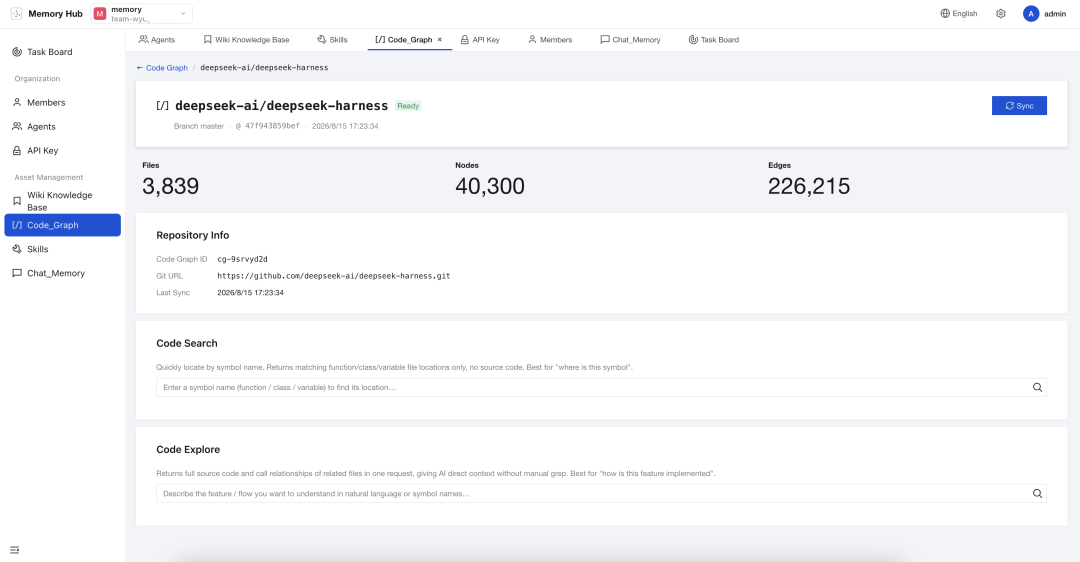
Integration is low-friction by design. Instead of a plugin, hook or MCP server, the package ships a proxy that speaks both the Anthropic and OpenAI protocols: point an agent’s base URL at it and memory is captured automatically. Storage defaults to SQLite + sqlite-vec, with Tencent Cloud VectorDB and an experimental MongoDB backend as options. It installs from npm as @tencentdb-agent-memory/memory-tencentdb on Node 22.16 or later.
Symbolic Memory for Long Tasks
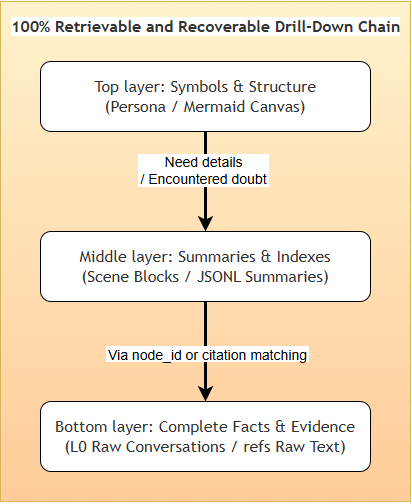
The biggest token consumers in a long agent run are intermediate artefacts — search results, file dumps, error traces. Tencent handles these with symbolic short-term memory: full tool logs are offloaded to external Markdown files, and what stays in context is a compact Mermaid graph of task state, each node carrying a node_id. To check a detail, the agent retrieves the raw text by that id — a few hundred tokens of task map in place of hundreds of thousands of tokens of log, with the underlying evidence still on disk.
Layered Long-Term Memory
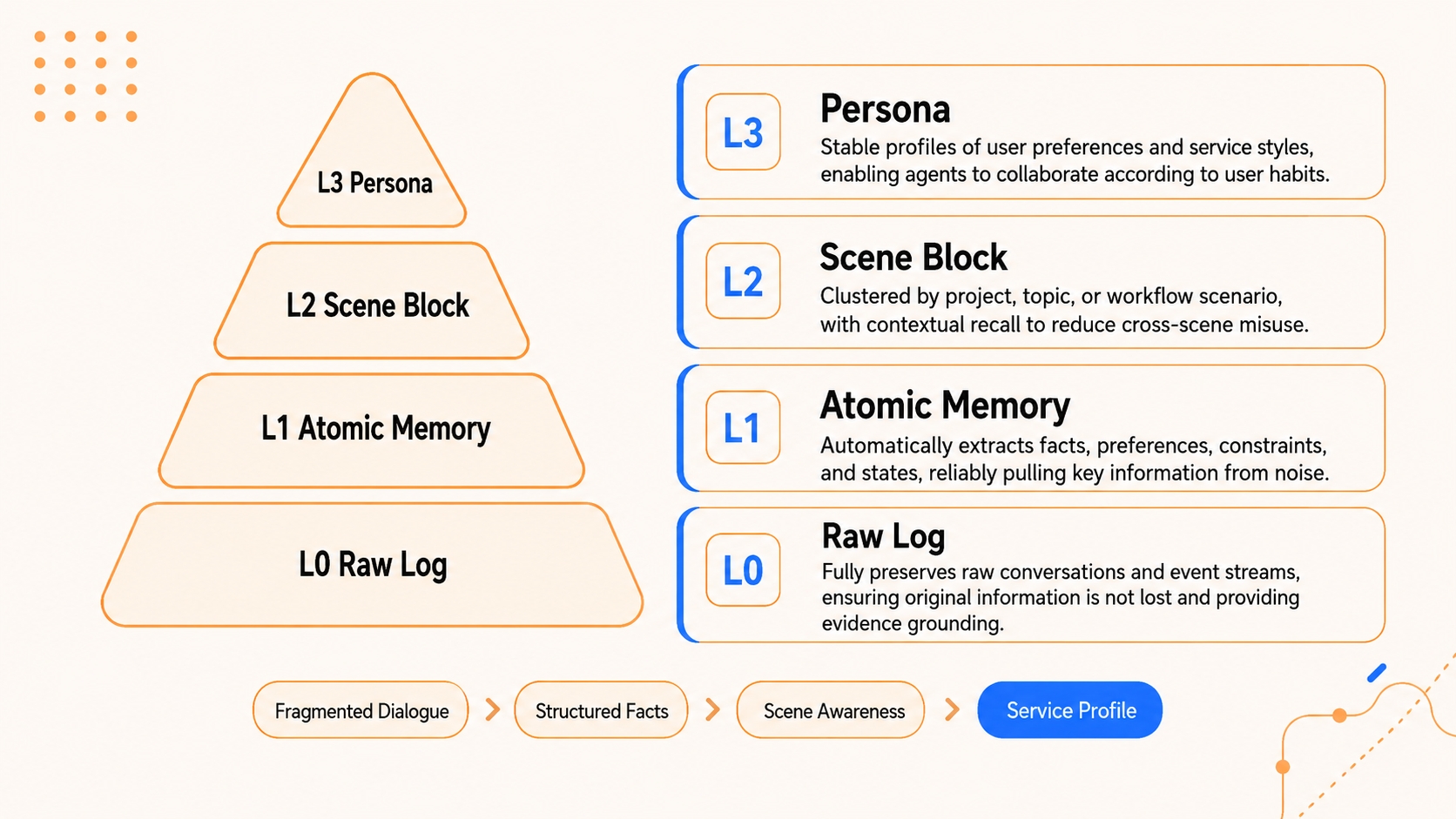
Cross-session memory is a four-level pyramid rather than a flat vector store: L0 Conversation (raw dialogue) → L1 Atom (extracted facts and preferences) → L2 Scenario (clustered scene blocks) → L3 Persona (the user or team profile). Recall starts at the top and drills down only when detail is needed. Storage is heterogeneous: lower layers sit in SQLite tables indexed with FTS5 and a vec0 virtual table for lexical and vector search, while upper layers are written as human-readable Markdown. Lower layers preserve evidence, upper layers preserve structure — so an abstraction can always be traced back to the text it came from.
The Reported Numbers
Tencent’s repository reports these results from continuous long-horizon sessions with the OpenClaw agent, not isolated turns — the SWE-bench figure, for example, runs 50 consecutive tasks per session to reproduce the context pressure of real work.
- WideSearch: pass rate 33% → 50% (+51.52% relative), tokens 221.31M → 85.64M (−61.38%)
- SWE-bench: 58.4% → 64.2% (+9.93%), tokens 3,474.1M → 2,375.4M (−33.09%)
- AA-LCR: 44.0% → 47.5% (+7.95%), tokens 112.0M → 77.3M (−30.98%)
- PersonaMem (long-term memory): 48% → 76% accuracy
Two caveats apply. The figures are Tencent’s own, measured inside one agent framework, so they are not a controlled comparison against other memory systems. And the v2 line — which carries the team hub, the proxy and the CodeGraph indexer — is still labelled Beta.
What This Means
For two years the default answer to “my agent forgets things” has been a bigger context window. This project belongs to a counter-movement that treats memory as infrastructure instead: what deserves storing, at what level of abstraction, and for how long. That matters for cost as much as capability, since retained history is billed on every turn.
The more distinctive choice is governance. Assets have owners, versions and visibility (private, team, or restricted via user, role and agent ACLs), and every L1–L3 mutation is journalled to an append-only audit table. A memory system a team shares is one whose mistakes are shared too, so versioning and access control are not incidental. The third-party Agent Memory Atlas review (September 20, 2026) flags two things worth knowing before deploying: the repository ships no test files, and a failed deduplication check silently defaults to storing every record rather than rejecting it.
The practical appeal for local-first users is that the default backend needs no external service and no API key — one SQLite file holds everything. The roughly 28,900 stars and 780-plus open issues point to an active user base rather than an announcement-only launch. The reason to watch the project is less the benchmark table than the questions it answers in code: who owns a memory, which version is current, and which agent should receive it.
Related Coverage
- Tencent Releases Hy3: 295B Open MoE Model Under Apache 2.0 — Tencent’s July 2026 open-weight reasoning-and-agent model, released under Apache 2.0.
- Meta Releases Muse Wonder, Its First Frontier Agent Models — the October 2026 agent release built around cross-conversation “active memory” and its own MemoryBench evaluation.
- Agents of Chaos: What Happens When Autonomous AI Agents Get Real Tools — a red-teaming study that gave agents persistent memory and shell access, and the failure modes it found.
- China Issues First National Policy Framework Dedicated to AI Agents — the May 2026 framework treating AI agents as a distinct class of system.
This post was drafted with AI assistance and reviewed by RITS staff.
Sources
- Tencent Cloud — TencentDB Agent Memory (GitHub repository and README)
- Tencent Cloud — TencentDB Agent Memory releases (v2.0.3-beta.1, 13 October 2026)
- npm — @tencentdb-agent-memory/memory-tencentdb
- Tencent Cloud Developer Community — “TencentDB Agent Memory 正式开源” (Chinese)
- 量子位 (QbitAI) — “腾讯开源 Agent 记忆技术方案,Token 消耗最高降低 61%” (Chinese)
- Tencent Cloud Techpedia — TencentDB Agent Memory overview
- MarkTechPost — “Tencent Open-Sources TencentDB Agent Memory: A 4-Tier Local Memory Pipeline for AI Agents” (May 2026)
- MarkTechPost — “Tencent Cloud Open-Sources TencentDB Agent Memory v2.0” (August 2026)
- Agent Memory Atlas — TencentDB Agent Memory code review (20 September 2026)


 沪公网安备31011502017015号