IntermediateAI
NVIDIA Reportedly Buys Hugging Face for $12.9B — llama.cpp Included
- acquisition
- ggml
- hugging face
- llama.cpp
- nvidia
- open source
On August 26–27, 2026, multiple outlets reported that NVIDIA has agreed to acquire Hugging Face for roughly $12.9 billion — a deal that, if it closes, would be the largest acquisition in NVIDIA’s history and would place the AI ecosystem’s default model-distribution platform under the ownership of its dominant chip vendor. Neither company has confirmed the reports, and both declined to comment. What makes the deal unusual is not the price but the inventory: alongside the Hub, NVIDIA would acquire transformers, the ggml tensor library, and llama.cpp — the runtime that most local inference on consumer hardware passes through.
What Has Been Reported
The chain of reporting runs as follows. Business Insider reported over the weekend of August 22–23 that Hugging Face had drawn takeover interest from multiple prospective buyers, including Salesforce. On the night of August 26, The Information reported that NVIDIA had concluded an agreement at approximately $12.9 billion, citing a source with knowledge of the talks. TechCrunch, Fortune, and SiliconANGLE carried the report the following day.
The status is important and widely under-stated. Fortune reported that the talks have not produced a signed agreement and could still fall apart. Neither NVIDIA nor Hugging Face responded to requests for comment from any outlet that sought one. Business Insider’s figure was slightly higher, above $13 billion.
The numbers around Hugging Face, per TechCrunch and Fortune:
- Founded in 2016; the Hub launched in 2020
- Last fundraise in 2023 — a $235 million round led by Salesforce Ventures at a $4.5 billion valuation
- Annualised revenue of roughly $150 million, up from about $100 million two months earlier, and “nearing profitability”
- Platform scale of 13 million developers, more than 2 million public models, and over 500,000 public datasets
TechSpot noted that $12.9 billion against $150 million in revenue works out to roughly 86× revenue. For comparison, NVIDIA’s largest completed acquisition to date was Mellanox, at $7 billion in 2020.
There is also a documented precedent that colours the current reporting. TechCrunch and Fortune both report that NVIDIA offered Hugging Face a $500 million investment in late 2025 at a $7 billion valuation, and that Hugging Face declined it — per Fortune, because the company “did not want a single dominant investor.”
What NVIDIA Would Be Acquiring
Hugging Face is usually described as “the GitHub of AI,” which undersells what the company has assembled. It now owns most of the layers between a published checkpoint and a token on someone’s machine:
- The Hub — hosting and distribution for models, datasets, and Spaces
transformers— the de facto reference implementation for model architecturesggmlandllama.cpp— the C/C++ inference runtime and the GGUF quantisation format, acquired in February 2026- Optimum — the hardware-acceleration layer, including backends for AMD, Intel, and AWS silicon
- Inference Endpoints — managed autoscaling inference


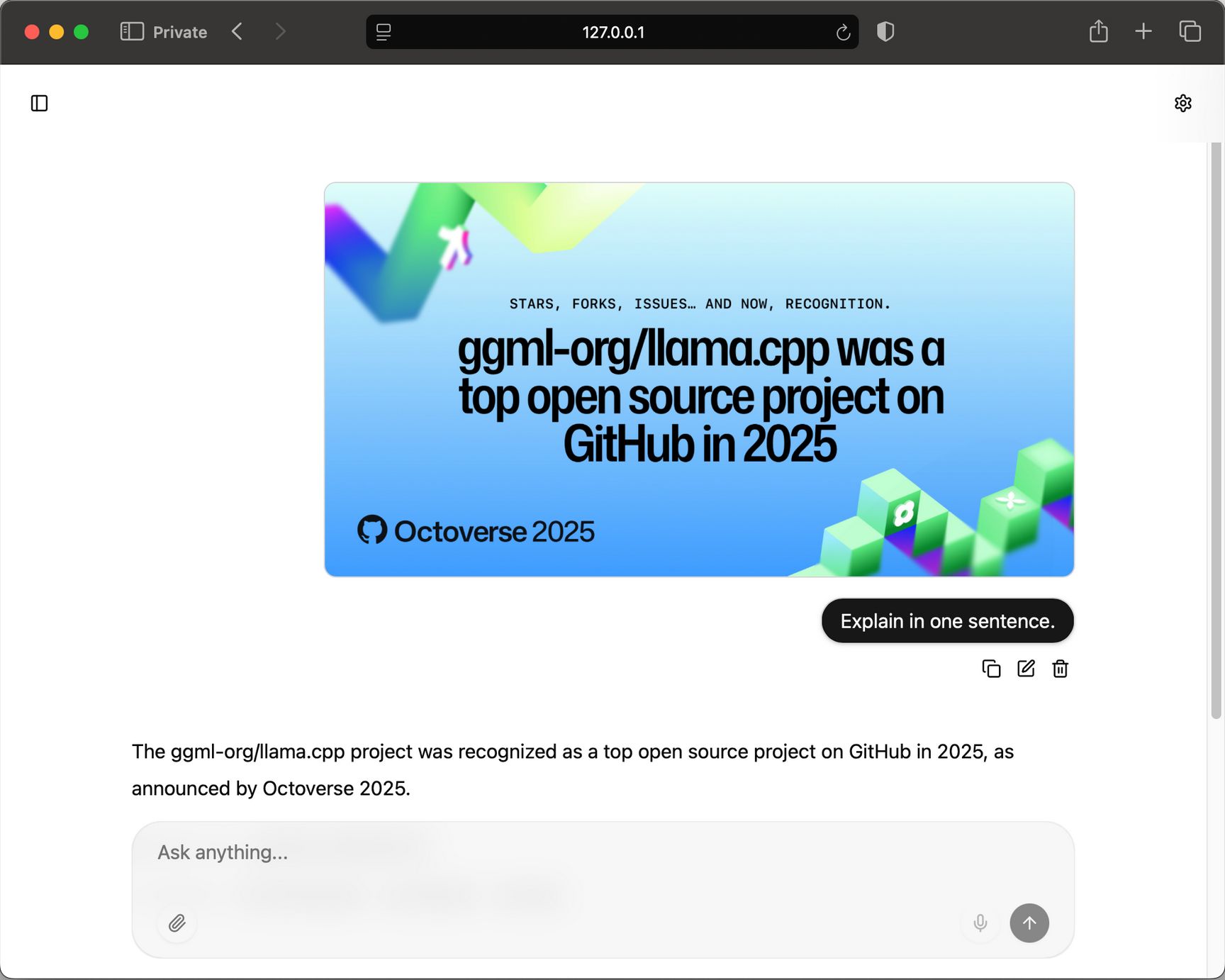
The ggml acquisition six months ago is the piece that turns this from a hosting deal into an infrastructure one. When Hugging Face acquired ggml.ai on February 20, 2026, bringing Georgi Gerganov and his team in-house, the stated arrangement was that the projects would “continue to be open-source and free to use,” with the maintainers retaining technical autonomy while Hugging Face absorbed legal, financial, hiring, and marketing overhead. That arrangement was made with a vendor-neutral platform company. An acquisition would transfer it to a GPU manufacturer.
What This Means
The concern raised most consistently across coverage is neutrality. The Hub’s value to the ecosystem has rested on not being anyone’s — a model published there is equally reachable whether the reader intends to run it on an H200, an MI355X, a Trainium instance, or a laptop. Ownership by the vendor with the largest stake in the answer changes the incentives around that neutrality, even if nothing in the platform changes on day one.
The counter-argument in the same coverage is that the integration work already runs in both directions. Optimum ships backends for AMD and Intel hardware today, and Hugging Face’s TensorRT-LLM integration predates any acquisition talk. NVIDIA and Hugging Face have partnered since 2023, when Hub models were wired into DGX Cloud for training and fine-tuning. And Jensen Huang’s stated position — that wider access to open models drives AI adoption and therefore demand for chips and data centres — is at least consistent with leaving the platform open, because a narrowed Hub sells fewer GPUs, not more.
The near-term question for anyone building on this stack is narrower than the strategic one. GGUF is a format, not a service; llama.cpp is MIT-licensed and mirrored across tens of thousands of forks. Neither can be closed retroactively. What an owner does control is the direction of future work — which backends get optimised first, which quantisation schemes get first-class support, and how much maintainer time goes to non-CUDA paths. Those are the things worth watching, and none of them will be visible in the announcement if one comes.
For now, the appropriate posture is that this is a well-sourced report, not a confirmed transaction. It has not been signed, and the parties are not commenting.
This post was drafted with AI assistance and reviewed by RITS staff.
Sources
- Nvidia closes in on Hugging Face acquisition — TechCrunch, August 26, 2026
- Nvidia nears $12.9 billion deal to buy open-source AI platform Hugging Face — Fortune, August 27, 2026
- Nvidia reportedly acquires AI project hosting platform Hugging Face for $12.9B — SiliconANGLE, August 27, 2026
- Nvidia is reportedly buying the popular open-source AI hub Hugging Face for $12.9 billion — TechSpot, August 27, 2026
- Nvidia’s $12.9B Hugging Face deal has an open-source problem — The New Stack, August 27, 2026
- GGML and llama.cpp join Hugging Face — Hugging Face Blog, February 20, 2026


 沪公网安备31011502017015号