Anthropic’s 2026 Agentic Coding Trends Report: From Assistants to Agent Teams


Anthropic released its 2026 Agentic Coding Trends Report outlining eight predictions for how AI coding agents will reshape software development this year. The report, subtitled “How coding agents are reshaping software development,” argues that 2026 marks the shift from single AI assistants to coordinated agent teams that can run autonomously for hours or days — while engineers move from writing code to orchestrating the systems that write it.
Intermediate
The Collaborative Reality
One of the report’s most cited findings comes from Anthropic’s Societal Impacts research: developers use AI in roughly 60% of their work, but report being able to “fully delegate” only 0–20% of tasks. AI serves as a constant collaborator, but effective use still requires thoughtful set-up, prompting, active supervision, validation, and human judgment — especially for high-stakes work.
Notably, about 27% of AI-assisted work consists of tasks that wouldn’t have been done otherwise: scaling projects, building nice-to-have dashboards, or fixing “papercut” issues that were previously deprioritized. Productivity gains, the report argues, come less from doing the same work faster and more from a much larger net increase in output volume.
Eight Trends, Three Categories
The report organizes its predictions into foundation, capability, and impact trends:
- Trend 1 — The SDLC changes dramatically. Cycle times collapse from weeks to hours as agent-driven implementation, automated testing, and inline documentation feed back into rapid iteration.
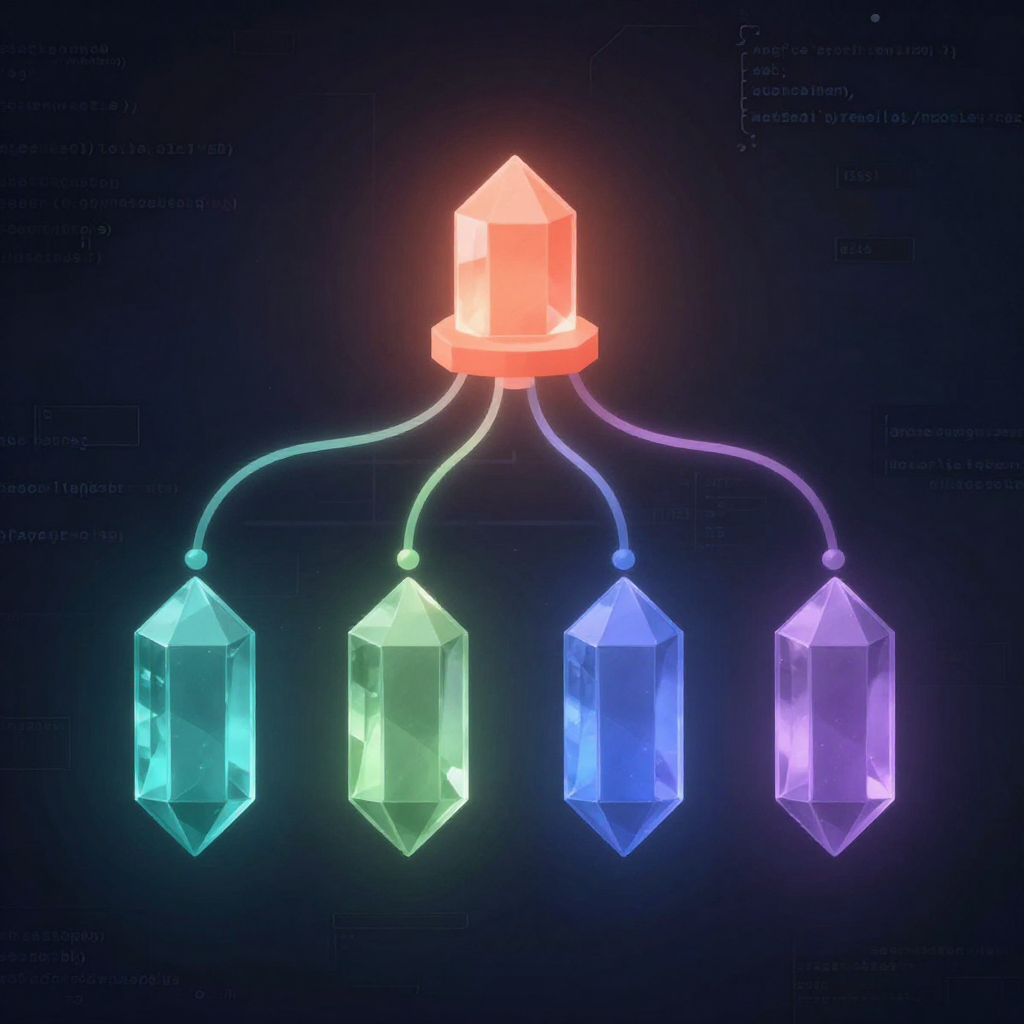
- Trend 2 — Single agents evolve into coordinated teams. Hierarchical multi-agent architectures use an orchestrator to coordinate specialized agents working in parallel across separate context windows.
- Trend 3 — Long-running agents build complete systems. Task horizons expand from minutes to days or weeks, with agents pausing only for strategic human checkpoints.
- Trend 4 — Human oversight scales through intelligent collaboration. Agents learn when to ask for help, flagging uncertainty rather than blindly attempting every task.
- Trend 5 — Agentic coding expands to new surfaces and users. Support for legacy languages like COBOL and Fortran grows, while non-developers in security, design, and operations adopt coding agents.
- Trend 6 — Productivity gains reshape software development economics. Timeline compression makes previously unviable projects feasible.
- Trend 7 — Non-technical use cases expand across organizations. Sales, marketing, legal, and operations teams build their own automations.
- Trend 8 — Dual-use risk requires security-first architecture. Defenders gain new capabilities, but so do attackers.
Customer Evidence
The report leans heavily on customer case studies to ground its predictions. At Rakuten, engineers reported that Claude Code finished a complex activation-vector extraction task inside vLLM — a 12.5-million-line open-source library — in seven hours of autonomous work in a single run, achieving 99.9% numerical accuracy versus the reference method.
Fountain, a frontline workforce platform, reported 50% faster screening, 40% quicker onboarding, and 2× candidate conversions using a hierarchical multi-agent setup, with one logistics customer cutting full fulfillment-center staffing from a week to under 72 hours.
TELUS teams created over 13,000 custom AI solutions, ship engineering code 30% faster, and have saved over 500,000 hours — averaging 40 minutes saved per AI interaction. CRED, an Indian fintech serving 15+ million users, reported doubling execution speed by shifting developers toward higher-value work rather than eliminating human involvement. Zapier reached 89% AI adoption across the entire company with 800+ internally deployed agents.
From Implementer to Orchestrator
The throughline of the report is a role change: in 2026, the value of an engineer’s contributions shifts to system architecture design, agent coordination, quality evaluation, and strategic problem decomposition. As one Anthropic engineer is quoted: “I’m primarily using AI in cases where I know what the answer should be or should look like. I developed that ability by doing software engineering ‘the hard way.'”
The report closes with four priorities for organizations planning their 2026 roadmap: mastering multi-agent coordination, scaling human-agent oversight, extending agentic coding beyond engineering, and embedding security architecture from the earliest stages. As Anthropic frames it: “the goal isn’t to remove humans from the loop — it’s to make human expertise count where it matters most.”
Related Coverage
- Anthropic Launches Claude Managed Agents for Scalable AI Deployment — the managed platform that productizes the multi-agent orchestration pattern described in Trend 2.
- OpenAI Ships Official Codex Plugin for Anthropic’s Claude Code — a concrete example of agents coordinating with each other across vendor lines.
- MiniMax M2.7 Ships as Open Weights: Frontier Agentic Model on Hugging Face — open-weights momentum behind the agentic-model wave.


 沪公网安备31011502017015号