World Labs Releases Marble 1.1: Auto-Expanding 3D World Generation


On April 2, 2026, World Labs — the spatial AI company co-founded by Stanford professor Fei-Fei Li — released Marble 1.1 and Marble 1.1 Plus, two upgraded versions of its generative 3D world model. Marble 1.1 replaces the original as the default model with improved visual fidelity, while 1.1 Plus introduces automatic spatial expansion that generates larger, more complex 3D environments in a single pass.
Intermediate


What’s New in Marble 1.1
Marble is World Labs’ multimodal world model that generates explorable, navigable 3D environments from text prompts or images. Since its commercial launch in November 2025, the platform has added an API (January 2026), and now ships two model upgrades.
Marble 1.1 is the new default model. It delivers improved lighting, contrast, and overall output fidelity while reducing visual artifacts — all at the same fixed cost of 1,500 credits per world. For existing users, the upgrade is seamless: new worlds automatically use 1.1 unless a different model is selected.
Marble 1.1 Plus is the headline addition. Previous Marble models generated worlds within a fixed spatial footprint, which limited scene scale. The Plus model introduces dynamic cubes — an auto-expanding system that detects when a scene calls for more space and adds up to five additional spatial units in a single generation pass. This eliminates the need for manual boundary adjustments when creating expansive environments. Pricing is variable: 1,500 credits for the base generation, plus 300 credits per additional dynamic cube.

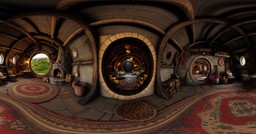
Platform Updates
Alongside the model upgrades, the release includes several quality-of-life improvements:
- Model selector — a new dropdown in the omnibox and Create surfaces lets users switch between Marble 1.0, 1.0 Draft, 1.1, and 1.1 Plus
- Version labels on assets — the assets page now shows which model generated each world or draft
- Advanced editing — a new “Create & edit” option in the omnibox surfaces editing tools directly
- Bug fixes — resolved multi-tab session conflicts and visibility cascading issues in Studio
The older Marble 1.0 and 1.0 Draft models remain available for existing workflows.
Why It Matters
World Labs has been shipping at a rapid pace since raising $1 billion in February 2026 from investors including NVIDIA, AMD, and Autodesk. Marble occupies a unique niche in generative AI: rather than producing images or videos, it creates fully navigable 3D environments rendered as Gaussian splats — exportable as .spz or .ply files and viewable on desktops, mobile devices, and VR headsets via the open-source Spark rendering library.
The 1.1 Plus model’s auto-expansion capability is particularly significant for production pipelines in gaming, virtual production, and architecture, where generating large-scale environments has traditionally required extensive manual work. With the World API (launched January 2026), developers can now programmatically generate and embed these 3D worlds directly into applications.
Generated worlds capture layout, depth, lighting, and spatial structure from minimal input — a single image, text prompt, multi-image set, 360° panorama, or even video. The platform is not optimized for people or animals, focusing instead on environmental and architectural scene generation.
Related Coverage
- Hi3DGen: The New State-of-the-Art for Image-to-3D Mesh Generation — another approach to AI-powered 3D generation, focused on mesh output from single images
- Tencent Hunyuan3D: A One-Stop AI 3D Content Creation Platform — Tencent’s competing 3D generation platform
This post was drafted with AI assistance and reviewed by RITS staff.


 沪公网安备31011502017015号