OpenAI Launches GPT-Live: Full-Duplex Voice for ChatGPT


OpenAI on July 8, 2026 launched GPT‑Live, a new generation of voice models now powering ChatGPT Voice. Built on a full-duplex architecture that listens and speaks at the same time, GPT‑Live‑1 and GPT‑Live‑1 mini are rolling out globally to ChatGPT users on iOS, Android, and the web starting today. The models replace the turn-based Advanced Voice Mode as the default voice experience and can delegate harder questions to GPT‑5.5 in the background — without pausing the conversation.
Intermediate


From Turn-Taking to Full Duplex
GPT‑Live is OpenAI’s third architectural generation of voice AI. The original ChatGPT Voice was a cascaded system: a speech-to-text model transcribed your words, a language model wrote a reply, and a text-to-speech model read it out. It worked, but information was lost between models and responses felt slow and stilted. Advanced Voice Mode collapsed that pipeline into a single turn-based audio model, which cut latency — but the model still had to wait for silence before it would respond, so a brief pause or background noise could trigger an awkward interruption.
GPT‑Live drops the notion of discrete turns entirely. Its full-duplex architecture continuously processes incoming audio while generating output, letting the model make interaction decisions many times per second: speak, keep listening, pause, interrupt, or call a tool. In practice, that means it can acknowledge you with a quick “mhmm” while you talk, stay quiet when you’re thinking, handle rapid back-and-forth, and even perform live translation. OpenAI says the model also keeps a better sense of time during a conversation.
Delegation: Talk While It Thinks
The second architectural change is a split between conversation and computation. GPT‑Live handles the live interaction itself, but when a question needs web search, deeper reasoning, or agentic work, it hands the task to a frontier model behind the scenes — GPT‑5.5 at launch — and keeps chatting while the answer is prepared. Users can pick a reasoning level to match the task: Instant for fast responses, or Medium and High, which route background work to GPT‑5.5 Thinking at medium and high reasoning effort. Because the interaction layer is decoupled from the reasoning layer, OpenAI can swap in newer frontier models over time without retraining the voice model.
In OpenAI’s new human evaluations — matched 5–10 minute conversations scored on overall preference, turn-taking, interruptions, and conversational flow — both GPT‑Live‑1 and GPT‑Live‑1 mini were strongly preferred over Advanced Voice Mode. The company also reports that GPT‑Live‑1 substantially outperforms Advanced Voice Mode on GPQA (expert-level scientific reasoning), shows strong gains on BrowseComp (agentic web search), and scores higher on an internal τ³-Voice Telecom benchmark that tests multi-turn voice support agents.
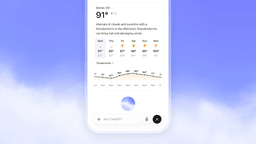
What’s New in ChatGPT Voice
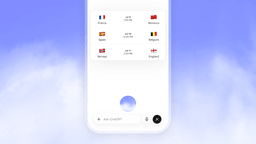
More than 150 million people already use ChatGPT’s Voice and Dictation features every week, and the new experience reaches all of them: GPT‑Live‑1 becomes the default voice model for Go, Plus, and Pro subscribers, while GPT‑Live‑1 mini serves Free users. The nine ChatGPT voices have been remastered for the new models. Voice can now display rich visual cards — weather, stocks, sports schedules, maps — while you talk, and it retains support for search, memory, images, and file uploads. Listening is also better: the model waits out thinking pauses, stays silent when asked to, and is more robust to background noise like traffic or nearby conversations.
Safety and Limitations
OpenAI built voice-specific safeguards into GPT‑Live: audio-native safety evaluations covering areas like self-harm, emotional reliance, violence, and sexual content; real-time interventions that can steer the model mid-sentence, surface crisis resources, or end higher-risk conversations; and teen protections wired into Parental Controls, including notifications to linked parents in situations involving signs of self-harm. The model uses only predefined voices and is trained not to imitate real people’s voices. Details are in the GPT‑Live system card.
At launch, GPT‑Live does not support voice with video or screen sharing — legacy Standard and Advanced Voice Modes remain available where those features matter — and fluency may lag in less common languages. API access is planned “soon”; developers can sign up to be notified.
Related Coverage
- OpenAI Launches GPT-Realtime-2 with GPT-5-Class Voice Reasoning — the previous generation of OpenAI’s realtime voice stack, released in May 2026
- OpenAI Releases GPT-5.5: Agentic Coding Ceiling Tops 14 Benchmarks — the frontier model GPT‑Live delegates to at launch
This post was drafted with AI assistance and reviewed by RITS staff.


 沪公网安备31011502017015号