OpenAI Brings GPT-6 and Intelligent UI to ChatGPT


OpenAI began rolling out GPT-6 in ChatGPT on October 7, 2026, together with a new capability called Intelligent UI that lets the chatbot answer with interactive interfaces — charts, buttons, forms, and small working tools — instead of text alone. The update reaches ChatGPT’s Chat tab globally: Plus, Pro, Business, and Enterprise subscribers received GPT-6 Sol first, with Free and Go users following on October 8 on GPT-6 Luna. OpenAI frames the release around an audience it puts at more than 1.2 billion weekly users.
Intermediate


From Text to Interface
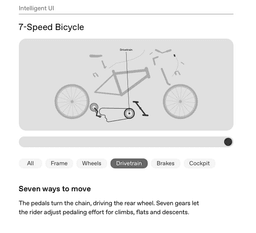
OpenAI says it trained GPT-6 to build a response from text, visuals, and interactive elements, and to decide how those pieces fit together based on the question. A comparison can appear side by side; an explanation can become an interactive diagram; and when a plain-text answer is the most useful one, ChatGPT still simply writes it. Launch demos include a savings calculator, a dinner bill splitter, and a game playable inside the conversation.
Under the hood sit two components OpenAI describes in its announcement: a library of native, streamable interface components and a compiler that renders the interface as the model generates it. Because the components stream, the layout appears progressively rather than waiting for the full reply. The model is also trained to assess its own output for clarity, usefulness, and completeness — though OpenAI acknowledges its design judgment still has room to improve.

Faster Answers, Same Models
The other half of the release is latency. GPT-6 can start answering while it is still thinking, adding information in stages instead of holding everything until the reasoning finishes. OpenAI reports that GPT-6 Instant begins answering questions that require web search 44% sooner on average than GPT-5.6 Instant — a measure of time to first response, not total completion. On a set of everyday agentic tasks, GPT-6 at its Extra High setting started replying in the time GPT-5.6 needed at Medium while still scoring higher overall than GPT-5.6 Extra High. All of these figures come from evaluations OpenAI ran itself.


Availability has caveats. The feature lives in the Chat tab, Enterprise access depends on administrator settings, and OpenAI’s older macOS and Windows desktop apps do not support it. The “Pro” reasoning level uses the Astra model and does not support Intelligent UI. On safety, OpenAI says GPT-6 inherits protections first developed for Astra, including stronger resistance to multi-turn attempts to bypass its training, and points readers to a full system card.
What This Means
Intelligent UI continues a shift already underway across the industry: the answer is increasingly an interface rather than a paragraph. Google shipped a comparable feature, “Neural Expressive,” to Gemini earlier in 2026, and the open-source world has been circling the same idea — Thesys’s OUI-1 model generates UI screens directly, while MCP Apps folds interactive interfaces into the Model Context Protocol.
The practical value depends on the task. When a question involves changing an input and seeing the result, or comparing options, a generated control can teach more than prose. But the caution that applies to any model output applies here too: a polished interface is not evidence that the numbers inside it are correct, and OpenAI’s speed and quality claims rest on internal evaluations that outside researchers have not yet reproduced. In its closing framing, OpenAI describes the ambition as a world where “software will adapt to people.”
Related Coverage
- OpenAI Releases GPT-6 Sol and Luna at Half the Price — the first GPT-6 models, now brought to all ChatGPT users.
- Thesys Releases OUI-1, a Diffusion Model That Writes UI Screens — an open-weight model that generates interfaces directly.
- MCP Apps: Interactive UIs Become an Official Part of MCP — interactive HTML interfaces inside an AI chat window.
This post was drafted with AI assistance and reviewed by RITS staff.
Sources
- GPT-6 and Intelligent UI for everyone — OpenAI (October 7, 2026)
- GPT-6 and Intelligent UI in ChatGPT — OpenAI Developer Community announcement
- Intelligent UI in ChatGPT — OpenAI Help Center
- ChatGPT’s ‘Intelligent UI’ update fills its responses with pictures, charts, and buttons — The Verge
- ChatGPT with GPT-6 ditches mostly text output for interactive UI — The Decoder
- GPT-6 brings interactive Intelligent UI answers to free ChatGPT users — BetaNews
- OpenAI ChatGPT Gets GPT-6 Model Alongside Intelligent UI — Tech Times


 沪公网安备31011502017015号