IntermediateAI
NVIDIA RTX PRO 5500 Blackwell: 5090 Compute, 84 GB, Built for Racks
- AI hardware
- blackwell
- gpu
- inference
- nvidia
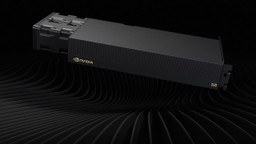
NVIDIA has added the RTX PRO 5500 Blackwell Workstation Edition to its professional GPU lineup. Product listings went up on September 14, 2026. The card pairs the same 21,760 CUDA cores as the consumer GeForce RTX 5090 with 84 GB of ECC GDDR7 memory, 2.6 times the 5090’s 32 GB, and draws up to 600 W. Unusually for an RTX PRO desktop card, NVIDIA says it is “designed for rack-mounted workstation deployment.” The pitch is aimed at IT teams that want to pool workstation GPUs in a server room and share them, rather than put one under every desk.

Technical Details
NVIDIA’s product page gives the following specifications, which it labels “preliminary product specifications, subject to change”:
- Architecture: Blackwell, with 5th-generation Tensor Cores and 4th-generation RT Cores
- Memory: 84 GB GDDR7 with error-correcting code (ECC)
- Memory bandwidth: 1,398 GB/s
- Max power: up to 600 W
- Interface: PCIe Gen 5 x16
- Display: up to 4× DisplayPort 2.1b
- Media: 3× 9th-gen NVENC encoders, 3× 6th-gen NVDEC decoders
- Cooling: active air-cooled, plus a liquid-cooled version in NVIDIA’s RXM form factor
NVIDIA’s page does not give a CUDA core count. The 21,760 figure comes from board partner PNY’s listing, as reported by HotHardware. PNY also lists a 416-bit memory bus. HotHardware notes that figure may be an error, since a 448-bit bus would better match 84 GB of memory and the stated bandwidth. Pricing and ship dates have not been announced, and NVIDIA’s page currently says only “Coming Soon.”
Where It Fits in the Lineup
The RTX PRO 5500 sits between two existing Blackwell workstation cards. Using the figures HotHardware compiled:
| Card | CUDA cores | Memory | Max power |
|---|---|---|---|
| GeForce RTX 5090 | 21,760 | 32 GB | — |
| RTX PRO 5000 Blackwell | 14,080 | 48 / 72 GB | 300 W |
| RTX PRO 5500 Blackwell | 21,760 | 84 GB | 600 W |
| RTX PRO 6000 Blackwell | 24,064 | 96 GB | 600 W |
With no official price, HotHardware notes that the 48 GB RTX PRO 5000 starts at around $8,599 and expects the new card to land “north of $10,000.” That is an outlet’s estimate, not an NVIDIA figure.
How Sharing Works: Multi-Instance GPU
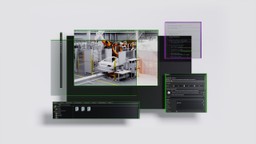
The feature that fits the rack pitch best is Multi-Instance GPU (MIG). NVIDIA says the card can be split into “up to two fully isolated instances,” each with “its own high-bandwidth memory, cache, and compute cores, along with guaranteed quality of service.” Several outlets, including HotHardware, report the split as two 42 GB instances. In practice, one card can act as a single 84 GB accelerator for a large job or as two separate 42 GB GPUs for two users, without either user’s workload affecting the other’s.
For LLM work, those memory sizes matter more than raw compute. As a rough guide, and ignoring context-length overhead, a 27B–35B-parameter model quantized to 8 bits needs about 30–40 GB for its weights. That fits within one 42 GB instance. A 70B-class model at 8 bits needs about 70 GB and fits on the full card.
What This Means
For the past year, much of the open-model community has chased single-GPU deployment. Recent releases such as Qwen3.8-27B and Meta’s Muse Glimmer were sized for a 24–32 GB consumer card. The RTX PRO 5500 approaches the same goal from the institutional side. It offers 5090-class compute with enough memory to serve those models at higher precision or with long context. MIG then lets an IT department share one card between two users rather than buy two workstations.
That model suits university labs and research institutes well. GPU demand there is bursty and spread across many users, and the concerns are power, noise and physical security. A rack-mounted, air- or liquid-cooled card that can be split up and scheduled is easier to run than a scattering of desk-side towers. The open questions are price and how many 600 W cards a given rack can power and cool. Until NVIDIA publishes pricing and availability, whether the card is a practical middle option or a smaller step below the RTX PRO 6000 remains to be seen.
This post was drafted with AI assistance and reviewed by RITS staff.


 沪公网安备31011502017015号